How to Start a Nonprofit Without Money: Your US Guide
start a nonprofit without money

How to Start a Nonprofit Without Money: Your US Guide

Launch your mission-driven organization in the US with minimal financial resources and maximum impact.

Begin Your Nonprofit Journey

Key Takeaways

  • ✓ You can begin your nonprofit work before formal incorporation.
  • ✓ In-kind donations and volunteer labor are crucial for initial growth.
  • ✓ Fiscal sponsorship can allow you to operate under another 501(c)(3).
  • ✓ Strategic planning and community engagement are free, powerful tools.

How It Works

1
Define Your Mission & Vision

Clearly articulate the problem your nonprofit will solve and your desired future state. This foundational step requires no money but is vital for attracting support.

2
Build a Core Volunteer Team

Recruit passionate individuals who believe in your cause and are willing to contribute their skills and time. Their dedication will be your most valuable asset.

3
Operate as a Grassroots Initiative

Start delivering services or organizing events informally to prove your concept and build momentum. This allows you to test your model before formalizing.

4
Explore Fiscal Sponsorship

Partner with an existing 501(c)(3) organization that can house your project. This enables you to accept tax-deductible donations without immediate incorporation costs.

Laying the Groundwork: Vision, Mission, and Initial Action

A diverse team gathered for a meeting in a modern office with creative decor, discussing plans. Photo: RDNE Stock project / Pexels
Many aspiring changemakers dream of starting a nonprofit but are quickly deterred by the perceived financial hurdles. The good news is that you absolutely can embark on the journey to start a nonprofit without money, especially in the initial stages. The key lies in strategic planning, leveraging non-monetary resources, and embracing a lean startup mentality. Before you even think about legal paperwork or fundraising, your primary focus should be on clearly defining your organization's purpose. This involves articulating a compelling vision and mission statement. Your vision statement should describe the ideal future state you aim to create – the world as it would look if your organization achieved its ultimate goals. It's often inspirational and aspirational. Your mission statement, on the other hand, defines your organization's purpose, what it does, for whom, and why. It's more action-oriented and specific. For instance, a vision might be 'A world where every child has access to quality education,' while a mission could be 'To provide free after-school tutoring and educational resources to underserved elementary school students in [Your City].' Crafting these statements requires deep thought and introspection, not money. They will serve as your guiding star, attracting like-minded individuals, volunteers, and eventually, donors. Once your mission and vision are crystal clear, the next step is to identify the specific problem you're addressing and the target beneficiaries. Conduct informal needs assessments within your community. Talk to people directly affected by the issue, local leaders, and other service providers. This grassroots research is invaluable and free. It helps validate your idea, refine your approach, and build early community connections. With a clear mission and an understanding of the need, you can begin taking action on a small scale. This might involve organizing a community clean-up, hosting a free workshop, or coordinating a donation drive using only volunteer labor and borrowed resources. These initial activities are crucial for demonstrating impact, building credibility, and attracting your first volunteers. Think of it as a proof-of-concept phase. Document everything you do – photos, testimonials, attendance numbers – as these will become your earliest 'assets' when you eventually seek formal support or funding. This period of informal operation allows you to test your program model, gather feedback, and iterate without the financial pressure or legal obligations of a fully formed nonprofit. It's about demonstrating passion, capability, and a genuine desire to make a difference, which are far more valuable than an initial bank balance. Remember, many successful nonprofits started as informal community initiatives before formalizing their structure. The power of a compelling idea and dedicated individuals can move mountains, even without a budget. This foundational work also helps you determine if your concept is viable and truly addresses an unmet need before investing significant time and resources into formalizing the organization. It's an iterative process of learning and adapting.

Leveraging Community, Volunteers, and In-Kind Support
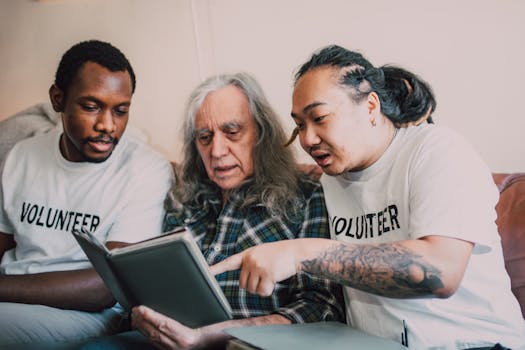
Volunteers assisting an elderly man with a photo album, demonstrating community support and multiculturalism. Photo: RDNE Stock project / Pexels
The cornerstone of starting a nonprofit without money is the strategic utilization of community resources, volunteer power, and in-kind donations. Your network is your net worth in the nonprofit world, especially when funds are scarce. Begin by reaching out to your personal and professional contacts. Share your vision and mission passionately. You'll be surprised how many people are willing to lend a hand, offer advice, or connect you with others who can help. This initial outreach is not about asking for money, but for time, skills, and resources. Volunteers are the lifeblood of any nascent nonprofit. Identify key roles that need to be filled – from administrative tasks and social media management to program delivery and event planning. Clearly define these roles and the time commitment required. Look for individuals with specific skills that can benefit your cause. For example, a graphic designer can create your logo and basic marketing materials, a writer can help draft communications, and an accountant can offer pro-bono advice on financial record-keeping. Platforms like VolunteerMatch or Idealist can be useful later, but initially, personal appeals and local community groups are often most effective. Host informal informational sessions to share your vision and recruit dedicated individuals who resonate with your cause. In-kind donations are another powerful tool. These are non-cash contributions of goods or services. Instead of buying office supplies, ask local businesses if they would donate surplus items. Need a venue for a meeting or event? Inquire with community centers, libraries, or churches about using their space for free or at a reduced rate. A local printer might offer to print flyers at cost or even pro-bono for a good cause. Software companies often provide free or discounted licenses for nonprofits. Even professional services, like legal advice for incorporation or marketing strategy, can sometimes be secured pro-bono from passionate professionals. Don't be afraid to ask – the worst anyone can say is no. Crucially, remember to acknowledge and appreciate every volunteer and in-kind donor. Publicly thank them, send personalized notes, and share the impact their contributions are making. This not only fosters goodwill but also encourages continued support and referrals. Building a strong, engaged community around your mission is a long-term investment that pays dividends far beyond monetary contributions. It creates a sense of ownership and shared purpose, transforming passive supporters into active advocates for your cause. This approach builds a robust foundation of support that is resilient and sustainable, even without significant financial capital. The collective effort of dedicated individuals and generous businesses can create momentum that money alone cannot buy. This phase is about demonstrating ingenuity and resourcefulness, proving that impact doesn't always require a large budget.

Navigating Legalities and Funding Without Upfront Capital

A business workspace setup featuring documents, coffee, and financial elements. Photo: Vlad Deep / Pexels
Once your informal activities gain traction and you've built a solid volunteer base, you'll eventually need to consider formalizing your organization. This is where the question of how to start a nonprofit without money becomes more complex, but still achievable. The primary legal step for most US nonprofits is to incorporate at the state level and then apply for 501(c)(3) tax-exempt status with the IRS. Both processes incur fees and require legal documentation. However, there are strategies to defer or minimize these costs. One of the most effective ways to gain tax-exempt status without immediate incorporation costs is through fiscal sponsorship. A fiscal sponsor is an existing 501(c)(3) organization that agrees to accept donations on behalf of your project. Donors can then make tax-deductible contributions to the fiscal sponsor, who then grants the funds to your project. This arrangement allows you to operate under the sponsor's tax-exempt umbrella, accept grants, and solicit tax-deductible donations while you build capacity and save for your own incorporation and 501(c)(3) application. There are different models of fiscal sponsorship, with Model A (direct project) and Model C (pre-approved grant relationship) being common. Research organizations like the National Network of Fiscal Sponsors (NNFS) to understand the options and find potential sponsors. While fiscal sponsors typically charge an administrative fee (5-10% of funds received), this is often far less than the initial costs and ongoing compliance burden of maintaining your own 501(c)(3) status, especially for a nascent organization. When it comes to state incorporation, some states have lower fees than others, and some offer fee waivers for eligible nonprofits. Research your specific state's Secretary of State or Corporations Division website for details. For drafting legal documents like articles of incorporation and bylaws, look for pro-bono legal assistance. Many law firms offer pro-bono services to charitable organizations, and local bar associations or university legal clinics can be excellent resources. Explain your mission and your financial constraints, and you might find a lawyer willing to help you navigate the paperwork free of charge. For the IRS Form 1023 application for 501(c)(3) status, the filing fee can be a significant hurdle. However, the IRS offers reduced fees for organizations with projected annual gross receipts under a certain threshold. Furthermore, some organizations qualify for a streamlined Form 1023-EZ if they meet specific criteria, which has a lower fee and simpler application process. Carefully evaluate if your organization qualifies. If not, fundraising specifically for these filing fees through small community events or crowdfunding platforms can be a viable strategy. Frame your appeal around the idea that these funds are an investment in your long-term impact. By strategically leveraging fiscal sponsorship, pro-bono legal help, and understanding IRS fee structures, you can navigate the legal and funding landscapes even with a minimal budget, ensuring your mission can grow and thrive.

Sustainable Growth: Frugal Fundraising & Operational Tips

Close-up of hands counting coins, implying budgeting or financial planning. Photo: Renan Braz / Pexels
Once you've established your mission, gathered volunteers, and perhaps even secured fiscal sponsorship, the focus shifts to ensuring sustainable growth without relying on large capital injections. Frugal fundraising is about maximizing impact with minimal expense. Instead of aiming for large grants immediately, start with small, community-focused fundraising efforts. These could include bake sales, car washes, small peer-to-peer campaigns, or crowdfunding drives that appeal to your immediate network and community. Emphasize the direct impact of even small donations. For example, 'Your $25 can provide school supplies for one child.' Operational efficiency is paramount when you're bootstrapping. Embrace free and low-cost tools for communication, project management, and basic administration. Google Workspace for Nonprofits offers free access to Google's suite of tools. Canva provides a free version for graphic design. Mailchimp has a free tier for email marketing. Social media platforms are free for outreach and engagement. Utilize open-source software whenever possible. Avoid renting expensive office space; operate virtually or use donated community spaces for meetings. Focus on direct program delivery and impact, minimizing overhead costs wherever possible. Building relationships is your most valuable asset for future funding. Attend local community events, network with other nonprofit leaders, and engage with potential donors on a personal level. Share your story, your passion, and the tangible impact you're making. Personal connections often lead to initial donations, volunteer recruitment, and introductions to larger funders down the line. Remember, people give to people, not just to causes. Your authenticity and dedication are powerful fundraising tools. Finally, cultivate a culture of resourcefulness within your team. Encourage volunteers to identify opportunities for in-kind donations, pro-bono services, or creative solutions to challenges. Regularly communicate your financial situation transparently with your core team, fostering a collective commitment to fiscal responsibility. By focusing on impact, leveraging free resources, and building strong relationships, you can grow your nonprofit sustainably without being limited by a lack of initial funds. This lean approach not only saves money but also builds a resilient and innovative organization from the ground up. **Tips for Frugal Fundraising & Operations:** * **Host micro-fundraisers:** Think small, engaging events that require minimal upfront cost (e.g., themed potlucks with a suggested donation). * **Leverage social media:** Create compelling content about your mission and impact to attract attention and small donations. * **Seek corporate matching programs:** Encourage donors to check if their employers offer matching gift programs, effectively doubling their contribution. * **Barter for services:** If you have a skill, offer to exchange your services for something your nonprofit needs (e.g., website design for legal advice). * **Apply for micro-grants:** Research local foundations or community organizations that offer small grants (under $5,000) for new initiatives. * **Regularly report impact:** Share stories and data on how donations are making a difference to maintain donor engagement and trust. * **Embrace digital tools:** Use free versions of project management, communication, and design software to keep administrative costs low. * **Recycle and repurpose:** Be creative with materials and resources; don't buy new if you can repurpose or get items donated. * **Negotiate everything:** From printing services to event supplies, always ask for a nonprofit discount or pro-bono consideration. * **Collaborate with other nonprofits:** Share resources, expertise, or even office space with complementary organizations to reduce costs.

Comparison

FeatureFiscal SponsorshipSelf-Incorporation (DIY)Self-Incorporation (Pro-bono Legal)
Tax-Exempt StatusImmediate (under sponsor)Delayed (after IRS approval)Delayed (after IRS approval)
Initial CostLow (admin fees on donations)High (state fees, IRS fees, legal)Moderate (state fees, IRS fees)
Time to StartWeeks to months6-12+ months6-12+ months
Administrative BurdenLower (shared with sponsor)High (full compliance)High (full compliance)
Access to Grants✓ (through sponsor)✓ (after 501c3)✓ (after 501c3)
Legal AutonomyLimited (project of sponsor)FullFull

What Readers Say

"This guide was a lifesaver! I thought I needed thousands to start my literacy program, but the section on fiscal sponsorship completely changed my perspective. We're now operating and making a difference, thanks to these strategies."

Maria S. · Austin, TX

"As an aspiring founder, the idea of legal fees was daunting. The advice on leveraging pro-bono legal help and community resources allowed me to envision a path forward without draining my personal savings. Highly recommend for anyone wanting to start a nonprofit without money."

David K. · Portland, OR

"The step-by-step approach to defining mission and gathering volunteers made the process feel achievable. We started with just five passionate individuals and now, a year later, we're serving over 50 families, all thanks to the 'no money' mindset this article promotes."

Sarah L. · Miami, FL

"While some parts still require significant effort and networking, this article provides the most practical and detailed blueprint for launching a nonprofit frugally. It demystifies the process and offers actionable alternatives to traditional funding."

Jamal R. · Chicago, IL

"I used the tips on in-kind donations and free software, and it saved my fledgling environmental group hundreds of dollars. It proved that passion and resourcefulness are more important than a big budget when you want to start a nonprofit without money."

Emily P. · Denver, CO

Frequently Asked Questions

What is the absolute minimum I need to start a nonprofit in the US?

The absolute minimum you need is a clear mission, dedicated volunteers, and a willingness to operate informally at first. You can begin delivering services and building community support without any money or formal legal structure. Formalization can come later, often with deferred costs through strategies like fiscal sponsorship.

Will I be able to accept donations if I haven't formally incorporated?

Informally, you can accept personal contributions, but they won't be tax-deductible for the donor. To accept tax-deductible donations, you typically need 501(c)(3) status. This can be achieved either by incorporating your own nonprofit and securing IRS approval, or more immediately, by operating under a fiscal sponsor's 501(c)(3) status.

How can I find pro-bono legal help for incorporation and 501(c)(3) application?

You can seek pro-bono legal assistance by contacting local bar associations, university law clinics, or reaching out directly to law firms that have a pro-bono program. Clearly articulate your mission and the impact you aim to make, as many lawyers are eager to support worthy causes.

What are the typical costs I eventually need to budget for, even if I start without money?

Eventually, you'll need to budget for state incorporation fees (varies by state), IRS Form 1023 filing fees (reduced for smaller organizations), and potentially annual state compliance fees. If using a fiscal sponsor, you'll pay an administrative fee on funds received. These costs can be raised through small, targeted fundraising efforts.

Is fiscal sponsorship a good long-term solution or just a temporary one?

Fiscal sponsorship can be a good long-term solution for certain types of projects, especially those that are smaller in scope, project-based, or don't require full organizational autonomy. However, for many organizations aiming for significant growth and complete independence, it's often viewed as a temporary stepping stone to eventually establishing their own 501(c)(3) status.

Who should consider starting a nonprofit without money?

Anyone with a strong passion for a cause, a clear vision for impact, and a willingness to leverage community resources and volunteer power should consider starting a nonprofit without money. It's ideal for individuals or small groups who want to test their concept, build momentum, and demonstrate impact before committing significant financial resources.

What are the risks of operating informally before formalizing?

The main risks of operating informally include inability to accept tax-deductible donations, lack of legal protection for founders and volunteers, and difficulty in applying for grants that require 501(c)(3) status. It's crucial to understand these limitations and formalize when your activities grow in scope and financial need.

What future trends might make starting a nonprofit without money even easier?

Future trends like increased accessibility to online collaboration tools, the rise of micro-volunteering platforms, more robust crowdfunding options for social impact, and a growing emphasis on community-led initiatives could make starting a nonprofit without money even more feasible. The digital landscape continues to lower barriers to entry for grassroots movements.

Don't let perceived financial barriers prevent you from pursuing your mission. This comprehensive guide proves that you can indeed start a nonprofit without money, building a powerful force for good through passion, resourcefulness, and community support. Take the first step today and transform your vision into reality.

Topics: start a nonprofit without moneylaunch nonprofit freenonprofit startup low costfrugal nonprofit founderbootstrap nonprofit US
Leo List

DK Escorts LU Escorts AT Escorts SE Escorts FI Escorts CH Escorts DE Escorts HR Escorts IE Escorts GR Escorts CZ Escorts NO Escorts BE Escorts FR Escorts SI Escorts IL Escorts NL Escorts PL Escorts HU Escorts ES Escorts IT Escorts PT Escorts SK Escorts RO Escorts ZA Escorts UY Escorts US Escorts UK Escorts NZ Escorts AU Escorts
Brampton weed
Adultwork EstrelaBet Vai de Bet R7 Bet Betão Galera Bet Rainbet Bet9ja Shop SportyBet BetKing Sisal Loto Foot Hollywoodbets YesPlay Odibets RushBet Jugabet BetWarrior BetCity MSport betPawa Fortebet