Mastering Nonprofit Marketing Strategies for Fundraising
nonprofit marketing strategies for fundraising

Mastering Nonprofit Marketing Strategies for Fundraising

Transform your outreach and fundraising efforts with proven, impactful marketing strategies designed for nonprofit success.

Boost Your Fundraising Today

Key Takeaways

  • ✓ Digital marketing drives 63% of online donations.
  • ✓ Personalized communication increases donor retention by 2-4x.
  • ✓ Storytelling is 22 times more memorable than facts alone.
  • ✓ Mobile giving is projected to grow by 20% annually.

How It Works

1
Define Your Audience & Mission

Clearly identify who you want to reach and articulate your organization's core purpose and impact. This foundation guides all subsequent marketing efforts.

2
Craft Compelling Stories

Develop narratives that showcase the real-world impact of your work and resonate emotionally with potential donors. Authentic stories inspire action and build connection.

3
Implement Multi-Channel Outreach

Utilize a mix of digital and traditional channels to reach your audience where they are most receptive. Consistency across platforms reinforces your message and brand.

4
Analyze, Adapt & Optimize

Regularly track the performance of your marketing campaigns and use data to refine your strategies. Continuous improvement is key to maximizing fundraising results.

Understanding the Landscape of Nonprofit Fundraising Marketing

A diverse group of friends stacking hands in a symbol of unity outdoors. Photo: Edmond Dantès / Pexels
In the dynamic world of philanthropy, effective nonprofit marketing strategies for fundraising are no longer optional – they are absolutely essential for survival and growth. The landscape for nonprofits in the US is increasingly competitive, with countless worthy causes vying for the attention and generosity of a finite pool of donors. To cut through the noise, organizations must adopt sophisticated, data-driven marketing approaches that go beyond traditional appeals. This involves a deep understanding of donor psychology, the strategic use of digital platforms, and the ability to tell compelling stories that inspire action. A robust marketing strategy for fundraising isn't just about asking for money; it's about building lasting relationships, demonstrating impact, and cultivating a community of passionate supporters. It’s about creating an emotional connection that transcends a transactional donation. At its core, successful nonprofit marketing for fundraising begins with clarity: clarity of mission, clarity of impact, and clarity of audience. Who are you trying to reach? What problem are you solving? What tangible difference does a donor's contribution make? Answering these questions forms the bedrock upon which all effective campaigns are built. Without this foundational understanding, even the most well-intentioned marketing efforts can fall flat. Consider the journey of a potential donor: they might first encounter your organization through a social media post, then visit your website, read a success story, and finally decide to contribute. Each touchpoint in this journey must be carefully designed to reinforce your mission, build trust, and guide them towards action. This holistic approach ensures that every communication piece works in concert to achieve your fundraising goals. Effective donor engagement strategies are paramount here, focusing on stewardship as much as solicitation. It's not just about acquiring new donors, but retaining and upgrading existing ones through consistent, meaningful interactions. Understanding the current trends, such as the rise of younger donors who prioritize transparency and impact, or the increasing importance of recurring giving programs, allows nonprofits to tailor their strategies for maximum effectiveness. Adapting to these shifts is crucial for any organization aiming for long-term sustainability and growth in their fundraising endeavors. Ignoring these nuances can lead to stagnant or declining donor bases, making the organization's mission harder to achieve. Therefore, investing time and resources into understanding and implementing sophisticated nonprofit marketing strategies for fundraising is perhaps the most critical investment an organization can make.

Crafting Your Narrative: The Power of Storytelling in Fundraising

Volunteers visit a home to provide community support and discuss documents. Photo: RDNE Stock project / Pexels
One of the most potent nonprofit marketing strategies for fundraising is the art of storytelling. Humans are inherently wired for stories; they resonate with us on a deeply emotional level, making complex issues relatable and inspiring empathy where mere statistics might fall short. For nonprofits, storytelling isn't just a communication tool; it's a fundraising superpower. A well-crafted story can transform abstract concepts like 'poverty alleviation' or 'environmental protection' into vivid, personal experiences that compel individuals to act. It shifts the focus from what your organization does to the tangible impact it has on real lives or the planet. To tell impactful stories, nonprofits must identify compelling subjects – individuals, families, communities, or even animals and ecosystems – whose lives have been positively touched by their work. These stories should highlight a challenge, demonstrate the intervention of the nonprofit, and showcase a positive outcome, emphasizing the donor's role in making that outcome possible. Authenticity is key; donors can easily spot manufactured narratives. Instead, focus on genuine experiences, using real quotes, photos, and videos to bring the story to life. Consider different formats for your stories: short videos for social media, detailed blog posts for your website, personal testimonials in email campaigns, and even longer-form features in annual reports. Each platform offers a unique opportunity to share your narrative and connect with different segments of your audience. The goal is to make the donor feel like a vital part of the hero's journey, not just an observer. When donors see themselves as partners in creating positive change, their commitment deepens, leading to increased giving and long-term loyalty. This personal connection is invaluable in cultivating a sustainable donor base. Think about how a story can be adapted for various channels – a powerful image with a concise caption for Instagram, a longer narrative for a blog post, or a video interview for a campaign landing page. Consistency in messaging, even when adapting the format, is crucial to reinforce your brand and mission. This strategic use of narrative across multiple touchpoints ensures your message resonates deeply and broadly. Furthermore, remember to update your stories regularly, showcasing new successes and evolving needs, keeping your audience engaged and informed about the ongoing impact of their support. This continuous narrative helps maintain momentum in fundraising efforts.

Multi-Channel Marketing: Expanding Your Reach and Impact
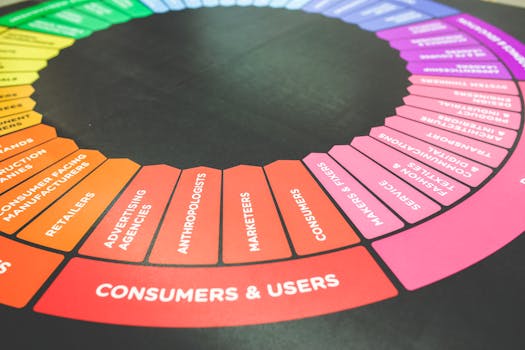
A vibrant diagram showcasing a marketing strategy wheel with various industry sectors and user categories. Photo: Karolina Grabowska www.kaboompics.com / Pexels
To maximize fundraising potential, nonprofit marketing strategies for fundraising must embrace a multi-channel approach. Relying on a single communication method, whether it's direct mail or social media, severely limits your reach and the diversity of your donor base. A comprehensive strategy integrates various channels, ensuring your message reaches potential supporters where they are most receptive, reinforcing your brand, and offering multiple avenues for engagement and donation. This integrated approach creates a cohesive donor journey, guiding individuals from initial awareness to sustained support. For example, an initial impression might come from a targeted Facebook ad, followed by an email newsletter with a compelling story, a direct mail piece with a personalized appeal, and then a follow-up text message for a specific campaign. Each channel plays a distinct role, but all work together towards the common goal of securing donations and building community. Digital channels are undeniably crucial in today's landscape. Your website serves as your digital storefront, a central hub where donors can learn about your mission, see your impact, and make secure donations. Search Engine Optimization (SEO) is vital to ensure your website is easily discoverable by those actively searching for causes like yours. Social media platforms (Facebook, Instagram, LinkedIn, Twitter, TikTok) offer unparalleled opportunities for brand awareness, community building, and direct fundraising appeals. Email marketing remains one of the most effective tools for donor cultivation and retention, allowing for personalized communication and segmented appeals. Beyond digital, don't underestimate the power of traditional channels. Direct mail, especially when personalized and targeted, can still yield significant results, particularly for older demographics. Public relations efforts, securing media coverage, and community events can boost visibility and credibility. The key is not to use every channel simultaneously but to strategically select and integrate those that best serve your target audience and fundraising goals. Analyze which channels yield the best engagement and return on investment for different segments of your donor base. Furthermore, ensure your messaging is consistent across all platforms, even if tailored slightly for each medium. A unified brand voice and visual identity build trust and recognition, reinforcing your mission at every touchpoint. Utilizing analytics to track the performance of each channel allows for continuous optimization, ensuring that your resources are allocated effectively. Developing a robust digital strategy is a cornerstone of this multi-channel approach, ensuring that your online presence is as impactful as your offline efforts. This holistic view ensures that every dollar spent on marketing is working as hard as possible.

Maximizing Impact: Essential Tips & Common Mistakes to Avoid

A young professional analyzing financial charts at a modern office desk with a laptop. Photo: Tima Miroshnichenko / Pexels
Implementing effective nonprofit marketing strategies for fundraising requires not only knowing what to do but also understanding what pitfalls to avoid. Here are some essential tips to maximize your impact and common mistakes that can hinder your fundraising efforts: **Essential Tips for Success:** * **Personalization is Paramount:** Segment your donor list and tailor your communications. A personalized email or direct mail piece significantly outperforms generic appeals. Address donors by name and reference their past giving or demonstrated interests. * **Demonstrate Impact Clearly:** Donors want to know how their money makes a difference. Use data, testimonials, and stories to show the tangible outcomes of their contributions. Quantify impact whenever possible (e.g., "Your $50 provided 10 meals"). * **Prioritize Donor Stewardship:** Fundraising doesn't end with a donation. Thank donors promptly and meaningfully. Show gratitude, share updates on impact, and make them feel valued. Strong stewardship leads to repeat donations and legacy giving. * **Optimize for Mobile:** A significant portion of online activity occurs on mobile devices. Ensure your website, donation forms, and email campaigns are fully responsive and easy to navigate on smartphones and tablets. * **Embrace Recurring Giving:** Encourage monthly or annual recurring donations. These provide stable, predictable income and often lead to higher lifetime donor value. * **Leverage Peer-to-Peer Fundraising:** Empower your supporters to fundraise on your behalf. This expands your reach exponentially, tapping into new networks through trusted voices. **Common Mistakes to Avoid:** * **Inconsistent Messaging:** Sending conflicting or unclear messages across different channels confuses donors and erodes trust. Maintain a consistent brand voice and mission statement. * **Neglecting Data Analysis:** Failing to track metrics (open rates, conversion rates, donor retention) means you can't learn what works and what doesn't. Data-driven decisions are crucial for optimization. * **Over-Solicitation Without Stewardship:** Bombarding donors with constant asks without providing updates or showing appreciation can lead to donor fatigue and attrition. * **Ignoring Segmentation:** Treating all donors the same is a missed opportunity. Different donor segments (first-time, recurring, major donors) require distinct communication strategies. * **Lack of Clear Call to Action:** Every piece of marketing should have a clear, concise call to action. Donors shouldn't have to guess what you want them to do next. * **Outdated Technology:** Using old, clunky donation platforms or a non-mobile-friendly website creates friction and can deter potential donors. Invest in modern, user-friendly tools. By focusing on these tips and actively avoiding common pitfalls, nonprofits can significantly enhance their marketing strategies for fundraising, leading to greater donor engagement and more successful campaigns.

Comparison

FeatureBest Option (Integrated Digital)Alternative 1 (Direct Mail Focused)Alternative 2 (Social Media Heavy)
Reach Potential DonorsBroad & TargetedGeographically LimitedDemographically Limited
Cost EfficiencyHigh ROI (with optimization)Moderate to HighVariable (ad spend)
PersonalizationHighModerateModerate
Data Tracking & AnalyticsExcellentLimitedGood
Donor Engagement DepthHighModerateModerate
Speed of Campaign LaunchFastSlowFast
Measurable Impact
Suitable for All Demographics✗ (older focus)✗ (younger focus)

What Readers Say

"This guide completely transformed our approach to nonprofit marketing strategies for fundraising. We saw a 30% increase in online donations within three months by implementing the storytelling and multi-channel advice. Truly invaluable!"

Sarah J. · Austin, TX

"As a small nonprofit, we struggled with donor retention. The section on donor stewardship and personalization in these nonprofit marketing strategies for fundraising gave us actionable steps that have significantly improved our long-term donor relationships. Highly recommend!"

David K. · Chicago, IL

"Our annual campaign fundraising grew by $50,000 after we revamped our digital presence using these nonprofit marketing strategies for fundraising. The advice on mobile optimization and clear calls to action made a huge difference in conversions."

Maria P. · Miami, FL

"While very comprehensive, some of the digital tools mentioned felt a bit out of reach for our budget. However, the core principles of storytelling and audience understanding within these nonprofit marketing strategies for fundraising are universally applicable and very helpful."

Tom L. · Denver, CO

"From a board member's perspective, understanding these nonprofit marketing strategies for fundraising helped us better evaluate our executive director's proposals. It provides a clear roadmap for sustainable growth and mission impact."

Jessica R. · Seattle, WA

Frequently Asked Questions

What are the most effective nonprofit marketing strategies for fundraising today?

The most effective strategies combine compelling storytelling, multi-channel digital outreach (email, social media, website), strong donor stewardship, and data-driven personalization. These elements work together to build trust, demonstrate impact, and foster long-term donor relationships, moving beyond simple donation requests to cultivate true community.

Is digital marketing really necessary for nonprofits, or is direct mail still sufficient?

While direct mail can still be effective, especially for certain demographics, digital marketing is absolutely necessary. It offers unparalleled reach, cost-efficiency, targeting capabilities, and data insights that traditional methods cannot match. A balanced, integrated approach using both, tailored to your audience, is often the most successful.

How can a small nonprofit with limited resources implement these strategies?

Start small and focus on consistency. Prioritize one or two key digital channels (e.g., email and one social media platform) where your audience is most active. Leverage free tools for email marketing and social media scheduling. Focus on authentic storytelling with simple photos/videos, and always thank your donors personally. Gradual implementation is key.

What is the typical cost associated with implementing robust nonprofit marketing strategies for fundraising?

The cost can vary significantly based on the scale and complexity. It can range from very low (leveraging free tools and volunteer time) to substantial (investing in advanced software, paid advertising, and professional staff). The key is to start with a budget you can manage, measure your ROI, and scale up as your fundraising grows. Many platforms offer nonprofit discounts.

How do these strategies compare to corporate marketing strategies?

While both aim for engagement and action, nonprofit marketing prioritizes emotional connection, demonstrating social impact, and building community over direct sales. Nonprofits often focus more on storytelling, transparency, and long-term donor relationships, whereas corporate marketing might emphasize product features, brand loyalty through consumption, and transactional conversions. However, many digital tactics are transferable.

Who should be responsible for implementing nonprofit marketing strategies for fundraising within an organization?

Ideally, a dedicated marketing or communications professional or team, even if part-time, should lead this effort. In smaller organizations, it might be the executive director or a board member. It's crucial that whoever is responsible has a clear understanding of marketing principles, fundraising goals, and the organization's mission to ensure cohesive and effective execution.

What are the risks of not having a clear marketing strategy for fundraising?

Without a clear strategy, nonprofits risk inconsistent messaging, inefficient use of resources, donor fatigue, stagnant or declining fundraising, and a failure to reach new audiences. This can ultimately jeopardize the organization's ability to fulfill its mission and sustain its operations. A lack of strategy often leads to reactive, rather than proactive, fundraising efforts.

How will AI and emerging technologies impact nonprofit marketing strategies for fundraising in the future?

AI is poised to revolutionize personalization, data analysis, and content creation in nonprofit marketing. It can help identify donor trends, automate segmentation, generate tailored appeals, and optimize campaign timing. Emerging technologies like virtual reality could offer immersive storytelling experiences, allowing donors to 'visit' impact sites, further deepening their connection to the cause.

Ready to transform your fundraising efforts and amplify your mission? Implement these proven nonprofit marketing strategies for fundraising today. Start building deeper donor relationships, telling more powerful stories, and securing the vital support your cause deserves.

Topics: nonprofit marketing strategies for fundraisingnonprofit fundraising marketingdonor engagement strategiescharity marketing best practicesfundraising communication
Leo List

DK Escorts LU Escorts AT Escorts SE Escorts FI Escorts CH Escorts DE Escorts HR Escorts IE Escorts GR Escorts CZ Escorts NO Escorts BE Escorts FR Escorts SI Escorts IL Escorts NL Escorts PL Escorts HU Escorts ES Escorts IT Escorts PT Escorts SK Escorts RO Escorts ZA Escorts UY Escorts US Escorts UK Escorts NZ Escorts AU Escorts
Brampton weed
Adultwork EstrelaBet Vai de Bet R7 Bet Betão Galera Bet Rainbet Bet9ja Shop SportyBet BetKing Sisal Loto Foot Hollywoodbets YesPlay Odibets RushBet Jugabet BetWarrior BetCity MSport betPawa Fortebet