
How to Make Authentic Nepali Momo Dough: A Culinary Journey
Master the art of creating supple, flavorful momo dough for an unparalleled homemade dumpling experience.
Start Rolling TodayKey Takeaways
- ✓ The secret to perfect momo lies in the dough's elasticity and hydration.
- ✓ Authentic Nepali momo dough typically uses only three core ingredients.
- ✓ Resting the dough is a crucial step for achieving pliability.
- ✓ Rolling technique significantly impacts the momo's final shape and cooking.
How It Works
Ensure you have high-quality all-purpose flour, water, and a pinch of salt. Precision in measurement is key for consistency.
Combine flour and salt, then gradually add water, kneading until a smooth, elastic dough forms. This process develops the gluten structure.
Cover the dough and let it rest for at least 30 minutes, or up to an hour. This relaxation period makes the dough easier to roll and more pliable.
Divide the rested dough into small portions, rolling each into thin, uniform circles. These will become the perfect wrappers for your momo filling.
Understanding the Fundamentals of Nepali Momo Dough
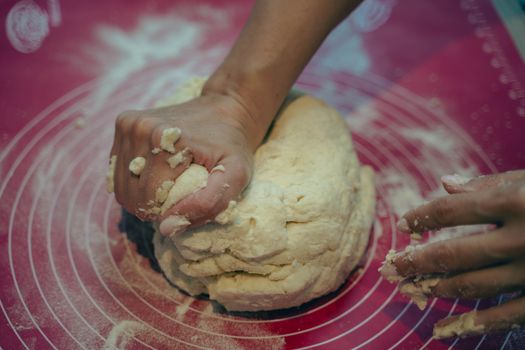 Photo: Vladimir Srajber / Pexels
The Art of Kneading and Resting for Perfect Pliability
For more options, check out immomo.org.
Rolling Techniques for Uniform and Thin Momo Wrappers
Common Pitfalls and Pro Tips for Momo Dough Success
Comparison
| Feature | Authentic Nepali Momo Dough | Store-Bought Wonton Wrappers | Chinese Dumpling Wrappers |
|---|---|---|---|
| Ingredients | Flour, Water, Salt | Flour, Water, Egg, Salt | Flour, Water, Salt, sometimes Egg |
| Thickness | Thin edges, slightly thicker center | Uniformly thin | Uniformly thin to medium |
| Elasticity | High, due to kneading/resting | Moderate | High |
| Pliability | Excellent, easy to fold | Good | Very Good |
| Flavor Profile | Neutral, subtle flour taste | Slightly eggy, neutral | Neutral |
| Best for Steaming | ✓ | ✗ | ✓ |
| Best for Pan-Frying | ✓ | ✓ | ✓ |
| Time to Prepare | Medium | Low (pre-made) | Medium |
What Readers Say
"This guide on How to Make Authentic Nepali Momo Dough transformed my homemade momos! My wrappers are now perfectly thin and so pliable, just like I remember from Nepal. The detailed kneading instructions made all the difference."
Priya Sharma · Dallas, TX"I've tried many dumpling recipes, but the specific technique for How to Make Authentic Nepali Momo Dough outlined here is superior. The resting period really does make the dough incredibly easy to work with. Highly recommend!"
Michael Chen · Seattle, WA"Following these steps for How to Make Authentic Nepali Momo Dough, I finally achieved momos that didn't tear during steaming. The rolling tips were crucial, and my family loved the tender texture of the wrappers."
Aisha Khan · Chicago, IL"The instructions for How to Make Authentic Nepali Momo Dough are very thorough, though it took me a couple of tries to get the thinness just right. The dough itself was fantastic, very elastic and held its shape well."
David Lee · Portland, OR"As someone who loves making dumplings from different cultures, this article on How to Make Authentic Nepali Momo Dough was incredibly insightful. The focus on simplicity and technique really highlights the beauty of Nepali cuisine."
Sophia Rodriguez · Miami, FLFrequently Asked Questions
What is the most important ingredient for authentic Nepali momo dough?
While all ingredients are crucial, the quality of your all-purpose flour and the water-to-flour ratio are paramount. High-quality flour provides better gluten development, and precise hydration ensures the dough is neither too sticky nor too stiff, leading to perfect elasticity.
My momo dough is too stiff and hard to roll. What did I do wrong?
This is a common concern, likely due to either insufficient water during mixing, not enough kneading to develop gluten, or most commonly, an inadequate resting period. Ensure you knead for at least 10-15 minutes and let the dough rest for a minimum of 30 minutes to relax the gluten.
How do I make my momo wrappers thin without tearing?
Achieving thin, tear-free wrappers comes down to proper kneading, adequate resting, and effective rolling technique. Focus on rolling from the center outwards, applying more pressure to the edges, and rotating the dough frequently. The resting period is key to making the dough pliable enough to stretch without tearing.
Is it worth making momo dough from scratch compared to buying pre-made wrappers?
Absolutely. Making momo dough from scratch allows for superior texture, freshness, and pliability that store-bought wrappers often lack. Homemade dough has a more neutral flavor that truly lets the momo filling shine, and its elasticity makes it much easier to fold into traditional momo shapes without cracking.
How does Nepali momo dough differ from Chinese dumpling dough?
While both are flour-based, Nepali momo dough is typically simpler, often just flour, water, and salt, resulting in a slightly chewier texture. Chinese dumpling dough sometimes incorporates egg or different flour blends, which can lead to a softer or more tender wrapper. The rolling technique and desired thickness at the edges also vary subtly.
Who should attempt to make authentic Nepali momo dough?
Anyone with a passion for cooking, an appreciation for traditional cuisine, or a desire to elevate their homemade dumpling game should try making authentic Nepali momo dough. It's a rewarding process that significantly enhances the overall momo experience, perfect for home cooks of all skill levels willing to practice.
Are there any health considerations when making momo dough?
Momo dough itself is quite healthy, consisting primarily of flour and water. The main consideration is ensuring proper hygiene during preparation and consuming it as part of a balanced meal. For individuals with gluten sensitivities, traditional momo dough is not suitable due to its high gluten content.
What are the future trends for momo dough preparation?
Future trends might include experimentation with alternative flours for gluten-free or healthier options, though these would deviate from traditional authenticity. There's also a growing interest in automated or semi-automated dough preparation methods for large-scale production while maintaining a homemade feel.
Embark on your culinary adventure and master How to Make Authentic Nepali Momo Dough today. With our detailed guide, you're not just making food; you're crafting a piece of Nepali culture in your own kitchen. Get ready to impress with perfectly pliable, delicious momo wrappers!