How to Find Local Nonprofits to Support US Communities
find local nonprofits to support US

How to Find Local Nonprofits to Support US Communities

Empower your community by connecting with impactful local nonprofits and making a real difference where it matters most.

Start Your Search Now

Key Takeaways

  • ✓ Over 1.8 million nonprofit organizations operate in the US, ranging from small local initiatives to large national entities.
  • ✓ Local nonprofits often have a more direct and immediate impact on specific community needs.
  • ✓ Due diligence is crucial; verify an organization's legitimacy and financial health before donating.
  • ✓ Donating time, skills, or goods can be as valuable as financial contributions for local nonprofits.

How It Works

1
Define Your Cause

Identify the issues you care most about, such as education, environment, poverty, or animal welfare. This focus will narrow your search and make it more effective.

2
Utilize Online Resources

Use reputable charity databases and local government sites to search for nonprofits in your specific area. These platforms provide vital information and contact details.

3
Vet Organizations Thoroughly

Examine their mission, programs, financial transparency, and impact reports. Look for signs of accountability and effective use of donations.

4
Engage and Support

Contact organizations directly, volunteer, or make a donation. Your engagement can take many forms, all contributing to their success.

Understanding the Impact of Local Charities US
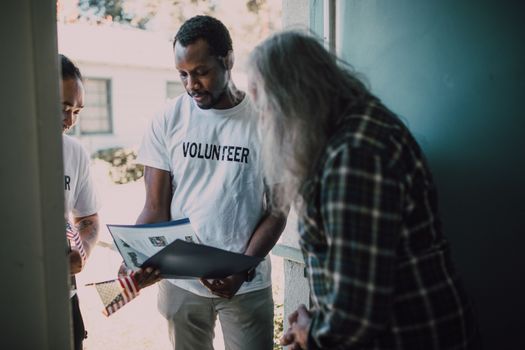
Volunteers visit a home to provide community support and discuss documents. Photo: RDNE Stock project / Pexels
When you decide to find local nonprofits to support US communities, you're tapping into a powerful force for change. Unlike larger national or international organizations, local charities are deeply embedded within the fabric of their specific communities. They understand the unique challenges, cultural nuances, and pressing needs of their immediate surroundings in a way that broader organizations often cannot. This intimate knowledge allows them to tailor programs and services that are highly effective and directly responsive to the people they serve. For instance, a local food pantry in a rural area might focus on distributing fresh produce from nearby farms, addressing both food insecurity and supporting local agriculture, while a national organization might have a more generalized distribution model. The impact of your support for these local entities is often more visible and tangible. You can see the direct results of your contributions, whether it's through improved local parks, better school programs, support for homeless individuals in your city, or animal welfare initiatives in your county. This proximity fosters a stronger sense of connection and accountability. Donors often have opportunities to meet the people benefiting from the services, volunteer their time directly, or attend local events, creating a more personal and rewarding giving experience. Moreover, local nonprofits frequently operate with leaner administrative structures compared to their larger counterparts. This can mean a higher percentage of your donation goes directly to programs and services, maximizing its impact. They rely heavily on community volunteers and local businesses, creating a synergistic ecosystem of support that strengthens the entire community. Supporting these organizations isn't just about charity; it's an investment in the social capital and resilience of your own neighborhood. It helps build a stronger, more vibrant place to live, work, and raise families. The economic ripple effect can also be significant. Local nonprofits often employ local residents, purchase goods and services from local businesses, and draw visitors to community events, all contributing to the local economy. Understanding this profound connection between local support and community well-being is the first step in making informed and impactful decisions when you choose to contribute.

Navigating Nonprofit Search Tools and Resources

Volunteer organizing donation boxes with clothes and supplies for charity. Photo: Gustavo Fring / Pexels
The digital age has made it significantly easier to find local nonprofits to support US causes, thanks to a wealth of online search tools and databases. These platforms are invaluable resources for identifying organizations, researching their missions, and evaluating their effectiveness. One of the most prominent tools is Charity Navigator (charitynavigator.org), which provides in-depth financial information, accountability metrics, and impact ratings for thousands of nonprofits. While it covers many organizations, it's particularly strong for medium to large-sized charities. GuideStar (guidestar.org), now part of Candid, is another essential resource. It collects and disseminates information on over 2.7 million IRS-recognized nonprofits, offering access to their IRS Form 990s (annual financial reports), mission statements, and program details. GuideStar's comprehensive database allows you to search by location, cause, and organization type, making it a powerful tool for local discovery. Beyond these national aggregators, several state-specific and local resources can be highly effective. Many states maintain their own charity registries, often found on the Secretary of State's website or Attorney General's office. These registries list organizations legally permitted to solicit donations within the state and can provide basic contact and registration information. Furthermore, local community foundations are excellent hubs for discovering nonprofits operating in a specific city or region. These foundations often have deep knowledge of local needs and maintain directories of grant recipients and partner organizations. Websites like VolunteerMatch (volunteermatch.org) or Idealist (idealist.org) are primarily known for volunteer opportunities but also offer searchable directories of nonprofits, allowing you to filter by location and cause. Don't overlook the power of local media outlets – newspapers, local news websites, and community blogs often feature stories about local charities and their work, providing insights into their impact and current needs. By combining these various tools, you can conduct a thorough and efficient search to identify organizations that align with your values and are making a tangible difference in your local area. Remember that smaller, grassroots organizations might not always appear on the largest national databases, so diversifying your search methods is key to finding a comprehensive list of potential beneficiaries.

Vetting and Evaluating Potential Community Organizations

Top view of business colleagues analyzing financial reports during a meeting at the office. Photo: Tiger Lily / Pexels
Once you've used various search tools to find local nonprofits to support US communities, the next critical step is thorough vetting and evaluation. This due diligence ensures that your valuable contributions of time or money are going to legitimate, effective, and well-managed organizations. Start by examining the organization's mission statement. Does it clearly articulate its purpose and goals? Does it resonate with your personal values and the causes you wish to support? A well-defined mission is the bedrock of any impactful nonprofit. Next, delve into their programs and services. How do they achieve their mission? Are their programs evidence-based or otherwise demonstrated to be effective? Look for specific examples of their work and the outcomes they achieve. Many reputable nonprofits publish annual reports or impact statements that detail their activities and successes. These documents are invaluable for understanding their operational effectiveness. Financial transparency is paramount. For larger nonprofits, you can often find their IRS Form 990s on GuideStar or the IRS website. This form provides a detailed breakdown of their income, expenses, assets, and liabilities. Key metrics to look at include the percentage of expenses allocated to programs versus administrative and fundraising costs. While there's no magic number, a general guideline is that at least 65-75% of expenses should go directly to programs. However, for smaller, newer organizations, administrative costs might initially be higher as they build capacity. Consider this context. Also, check if the organization has an independent board of directors. A diverse and engaged board provides oversight and accountability. Look for clear contact information and responsive communication. A legitimate nonprofit will be happy to answer your questions and provide additional information about their work. Finally, consider seeking out third-party reviews or opinions. Local community leaders, other donors, or even beneficiaries of the organization's services can offer valuable perspectives. Visiting the organization, if possible, or attending a public event can also provide firsthand insight into their operations and culture. By taking these steps, you can confidently choose an organization that is not only doing good work but is also responsible and impactful.

Beyond Financial Donations: Diverse Ways to Support Local Nonprofits

A volunteer sitting in a van organizing medicine boxes for shipment. Photo: RDNE Stock project / Pexels
While financial contributions are often crucial for local nonprofits, supporting them extends far beyond simply opening your wallet. There are numerous other ways to contribute when you find local nonprofits to support US communities, each offering unique value and strengthening the organization's capacity. **Volunteer Your Time:** This is perhaps the most direct and impactful non-financial contribution. Nonprofits often rely heavily on volunteers for everything from administrative tasks and event planning to direct service delivery. Whether it's helping at a food bank, mentoring youth, walking dogs at a shelter, or assisting with community clean-ups, your time is invaluable. **Share Your Skills (Pro Bono Work):** Do you have professional skills in marketing, legal advice, accounting, web design, or strategic planning? Many small nonprofits lack the resources to hire for these specialized roles. Offering your expertise pro bono can save them significant costs and dramatically improve their operations and reach. **Donate Goods and Services:** Depending on the nonprofit's mission, they might need specific goods. Animal shelters always need blankets and food. Homeless shelters require clothing and hygiene products. Schools and after-school programs benefit from school supplies, books, or art materials. Consider donating gently used items or purchasing specific items from their wish lists. **Advocacy and Awareness:** Help spread the word! Share information about the nonprofit's work on social media, talk to friends and family, or write letters to local representatives. Raising awareness for their cause can attract new donors, volunteers, and supporters. **Attend or Host Fundraising Events:** Participate in their charity runs, galas, or community festivals. Better yet, consider hosting your own small fundraiser, like a bake sale or a charity drive, and donate the proceeds. **Corporate Matching Programs:** If your employer has a matching gift program, your financial donation can be doubled, significantly increasing its impact. Inquire with your HR department about this benefit. **In-Kind Donations:** Businesses can offer in-kind donations like office space, printing services, catering for events, or technology. This reduces the nonprofit's operational costs, freeing up funds for programs. By exploring these diverse avenues of support, you can contribute in a way that best suits your resources and passions, creating a more holistic and sustainable impact on the local nonprofits you choose to champion.

Comparison

FeatureCharity NavigatorGuideStar (Candid)Local Community FoundationState Charity Registry
Scope of NonprofitsNational (larger focus)National (comprehensive)Local/RegionalState-specific
Financial Data DepthHigh (ratings & metrics)Very High (IRS Form 990s)Varies (grant info)Basic (registration data)
Impact ReportingYes (some metrics)Yes (program details)Yes (grant outcomes)Limited/No
Ease of UseUser-friendly ratingsDetailed, more complexOften curated listsGovernment site interface
Volunteer Opportunities✓ (often connections)
Focus on Small/New OrgsLimitedYes (if IRS registered)

What Readers Say

"Using GuideStar helped me find local nonprofits to support US education initiatives right here in Austin. I found a small tutoring program that desperately needed volunteers, and it's been incredibly rewarding to see the direct impact."

Sarah J. · Austin, TX

"I wanted to support animal welfare locally. Charity Navigator gave me confidence in the financial health of the shelter I chose, ensuring my donation to find local nonprofits to support US animal causes was well-spent."

Michael R. · Portland, OR

"After researching how to find local nonprofits to support US hunger relief, I connected with a community kitchen that now receives monthly food donations from my business. Their transparency and immediate impact were key."

Emily C. · Miami, FL

"It took a bit of digging to find a smaller, grassroots environmental group that wasn't on the big national databases, but the local community foundation directory was a great starting point to find local nonprofits to support US environmental efforts. Worth the effort!"

David L. · Denver, CO

"As a new resident, I used local news articles and city council websites to find local nonprofits to support US arts programs. It helped me feel more connected to my new community and contribute to its cultural vibrancy."

Jessica T. · Boston, MA

Frequently Asked Questions

What's the best way to start my search to find local nonprofits to support US communities?

Begin by identifying your passion areas (e.g., environment, education, health). Then, use online databases like GuideStar or Charity Navigator, combined with local community foundation websites or state charity registries, to find organizations in your specific geographic area that align with your interests.

How can I be sure a local nonprofit is legitimate and uses donations effectively?

Check their IRS Form 990 (available on GuideStar), look for transparent annual reports on their website, and review ratings from independent evaluators like Charity Navigator. A legitimate organization will also have clear contact information and be responsive to inquiries.

Can I support local nonprofits without donating money?

Absolutely! Volunteering your time, offering professional skills pro bono, donating goods (like clothing or food), participating in advocacy, or even simply spreading awareness about their work are incredibly valuable forms of support. Many nonprofits thrive on non-monetary contributions.

Are smaller local nonprofits less trustworthy than larger ones?

Not necessarily. While smaller organizations might have fewer resources for extensive public reporting, many are highly effective and deeply connected to their communities. Due diligence is important for all organizations, regardless of size. Look for strong local reputations and clear mission statements.

What's the difference between a local chapter of a national charity and an independent local nonprofit?

A local chapter typically operates under the umbrella and guidelines of a larger national organization, often sharing resources and branding. An independent local nonprofit is self-governing, with its mission and operations entirely focused on its specific community without national affiliation. Both can be impactful, but their governance and funding structures differ.

Who benefits most from my decision to find local nonprofits to support US communities?

The primary beneficiaries are the individuals and groups within your immediate community who receive direct services from these organizations. However, the entire community benefits from improved social services, environmental protection, cultural enrichment, and economic stability that local nonprofits provide.

What if I can't find any local nonprofits for my specific cause?

Consider broadening your search to related causes or looking for organizations that address root causes of the issue you care about. You might also find that existing local nonprofits have programs or initiatives that indirectly support your cause, even if it's not their primary focus. Sometimes, starting a new initiative or volunteering with a broader community group can be a way to address unmet needs.

How will the landscape of local nonprofits change in the coming years?

The nonprofit landscape is likely to see continued growth in technology adoption for fundraising and service delivery, increased emphasis on data-driven impact measurement, and a greater need for collaboration among organizations to address complex community challenges. Local nonprofits will also likely become even more critical as immediate responders to localized crises and evolving community needs.

Ready to make a tangible difference in your own backyard? Use this guide to find local nonprofits to support US communities and become a vital part of the positive change. Your local community is waiting for your unique contribution.

Topics: find local nonprofits to support USlocal charities USsupport community organizationsnonprofit search toolsdonating locally
Leo List

DK Escorts LU Escorts AT Escorts SE Escorts FI Escorts CH Escorts DE Escorts HR Escorts IE Escorts GR Escorts CZ Escorts NO Escorts BE Escorts FR Escorts SI Escorts IL Escorts NL Escorts PL Escorts HU Escorts ES Escorts IT Escorts PT Escorts SK Escorts RO Escorts ZA Escorts UY Escorts US Escorts UK Escorts NZ Escorts AU Escorts
Brampton weed
Adultwork EstrelaBet Vai de Bet R7 Bet Betão Galera Bet Rainbet Bet9ja Shop SportyBet BetKing Sisal Loto Foot Hollywoodbets YesPlay Odibets RushBet Jugabet BetWarrior BetCity MSport betPawa Fortebet